 PlacerPro
Gold panning in Virginia
Where to pan for gold in Virginia, the official public panning areas, and the rules for each kind of land. Our map of Virginia draws on 1,321 gold records: old mines, prospects, placer claims and lab-tested stream samples.
The short answer: The areas of Virginia with the most gold records in our data are the gold-pyrite belt, the Eastern Virginia Piedmont, Southside Virginia and the Southwest Virginia Blue Ridge. We haven't found an officially designated public panning area here yet, so check who owns the land first. To pan legally, you need open public land that isn't under a mining claim, or the owner's permission.
Virginia on the map
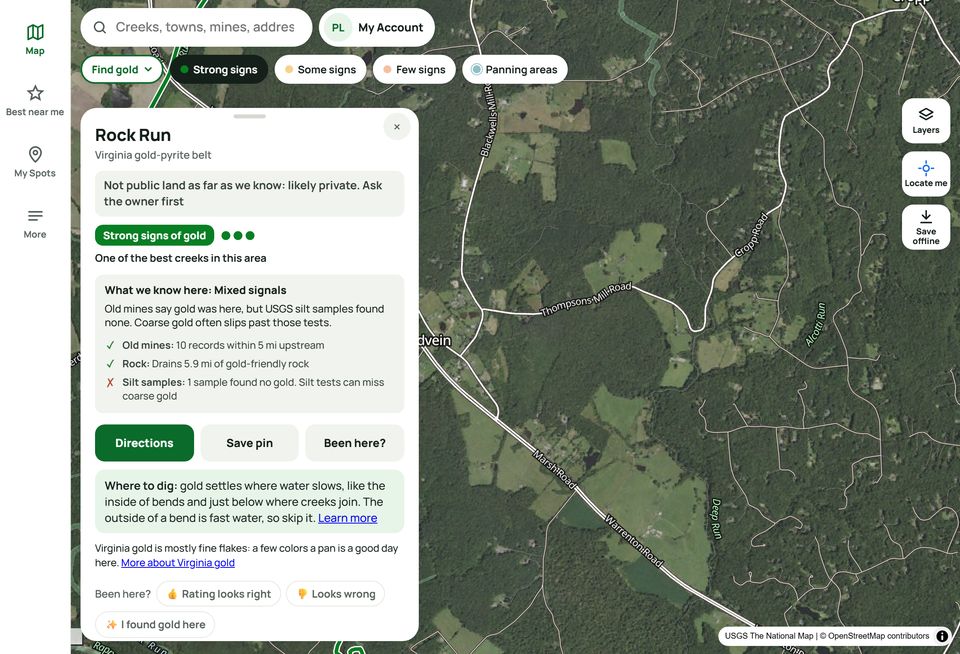
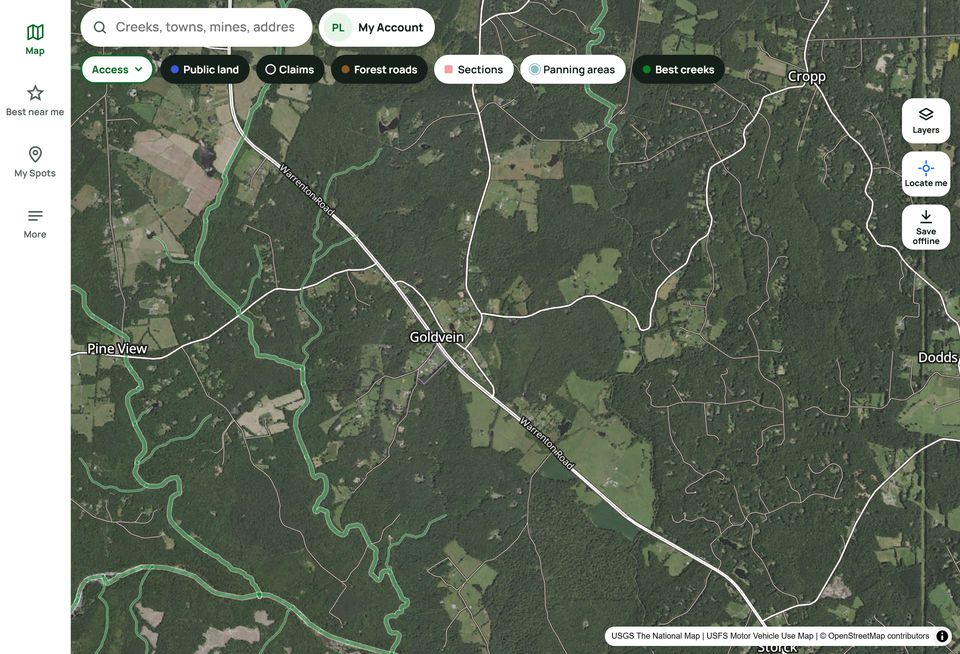
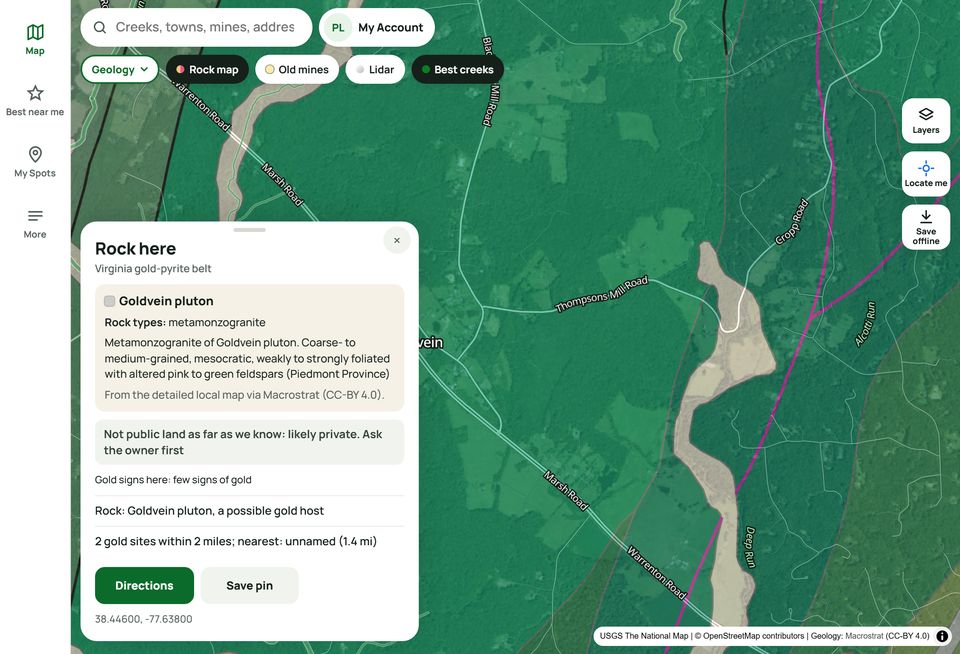
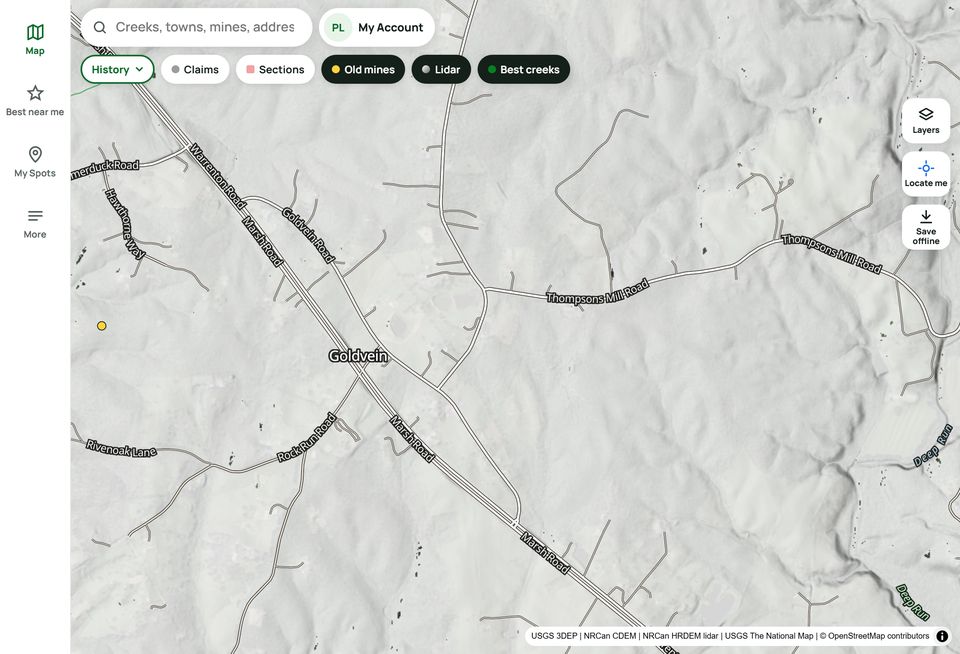
PlacerPro at Goldvein in the Virginia gold belt, Virginia.
Gold areas in Virginia
PlacerPro covers Virginia's known gold country:
- Blue Ridge front (Amherst, Nelson, Bedford)
- Buckingham County, VA
- Eastern Virginia Piedmont (Amelia to Hanover)
- Gold-pyrite belt
- Northern Virginia (Great Falls district)
- Southside Virginia (Virgilina / slate belt)
- Southwest Virginia Blue Ridge
Try the Virginia map free for 7 days
Where to dig once you're on the creek
Even on a good creek, most of the gravel holds little. Gold settles where the water slows: the inside of bends, just below where creeks join, behind boulders, and down in bedrock cracks. Read the beginner's guide to where gold settles.
Gold panning rules in Virginia
- Almost all of this land is private. Get the owner's written permission before you pan, dig or detect, and use legal access to reach the water. Old mines are private property and can be dangerous: stay out of shafts.
- Public land outlines show general rules by land type (from USGS PAD-US). Rules change and boundaries can be off: confirm with the managing office before you go.
- Virginia streambeds: Code of Virginia § 28.2-1203(A)(8) exempts recreational gold mining on state-owned streambeds from a VMRC permit (hand-carried suction dredge 4 in or smaller, no harm to riparian rights, other stream uses or underwater historic sites). Only ungranted beds are state-owned; some colonial grants include the streambed.
- State forests and parks: panning is not clearly authorized. Call the forest or park office first.
Common questions
Where can I pan for gold in Virginia for free?
We haven't found an officially designated public panning area in Virginia yet. Panning is usually allowed on open public land (national forest and BLM) that isn't covered by a mining claim, and on private land with the owner's permission.
Do I need a permit to pan for gold in Virginia?
Hand panning usually needs no permit on open public land, but the rules depend on who manages the land and what tools you use. Sluices, highbankers and dredges often need permits. The rules for Virginia are below.
How do I find gold-bearing creeks in Virginia?
Gold washes downstream from where it eroded out of the rock, so the best creeks drain old mining districts and gold-bearing rock. PlacerPro rates every creek in Virginia's gold country from old mine records, USGS lab samples and geologic maps, and shows public land and active claims.
Other places
- Gold panning in Alabama
- Gold panning in Alaska
- Gold panning in Arizona
- Gold panning in British Columbia
- Gold panning in California
- Gold panning in Colorado
- Gold panning in Georgia
- Gold panning in Idaho
- Gold panning in Maine
- Gold panning in Montana
- Gold panning in Nevada
- Gold panning in New Hampshire
- Gold panning in New Mexico
- Gold panning in North Carolina
- Gold panning in Oregon
- Gold panning in South Carolina
- Gold panning in South Dakota
- Gold panning in Tennessee
- Gold panning in Utah
- Gold panning in Vermont
- Gold panning in Washington
- Gold panning in Wyoming
- Gold panning in Yukon
PlacerPro rates every creek in the gold country of 22 US states, British Columbia and Yukon from old mine records, lab samples and geologic maps. Public panning areas are from official agency sources; check the linked source before you go. Nothing here is legal advice.