 PlacerPro
Gold panning in South Carolina
Where to pan for gold in South Carolina, the official public panning areas, and the rules for each kind of land. Our map of South Carolina draws on 877 gold records: old mines, prospects, placer claims and lab-tested stream samples.
The short answer: The areas of South Carolina with the most gold records in our data are the slate belt and the upstate. We haven't found an officially designated public panning area here yet, so check who owns the land first. To pan legally, you need open public land that isn't under a mining claim, or the owner's permission.
South Carolina on the map
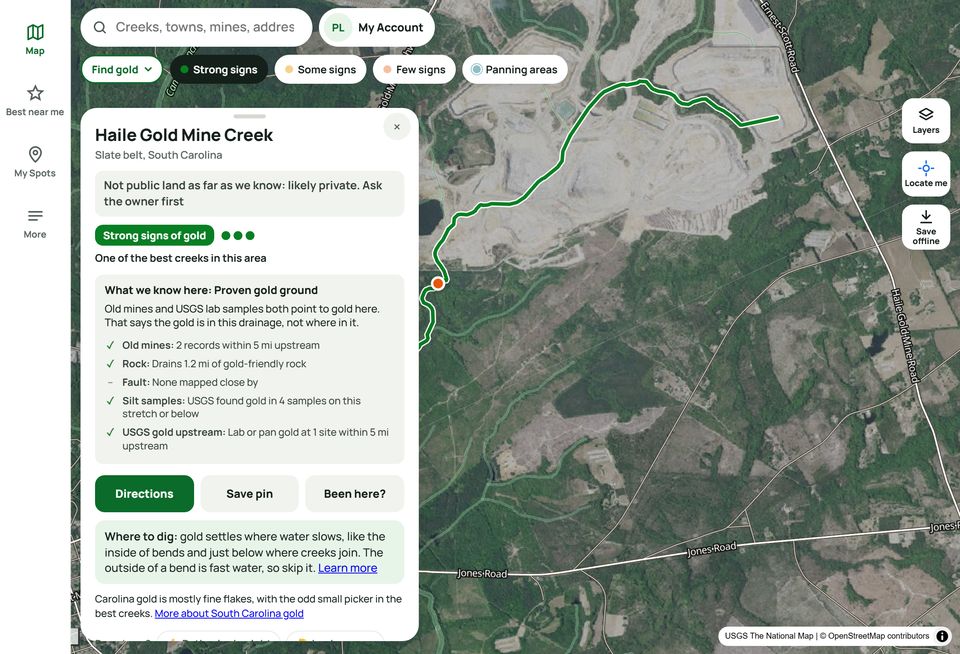
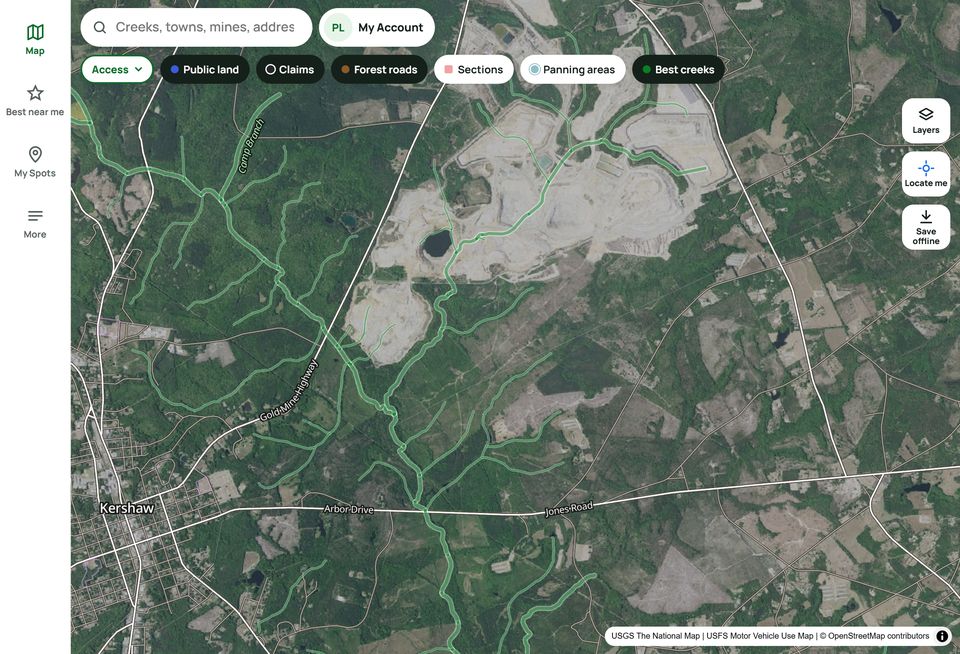
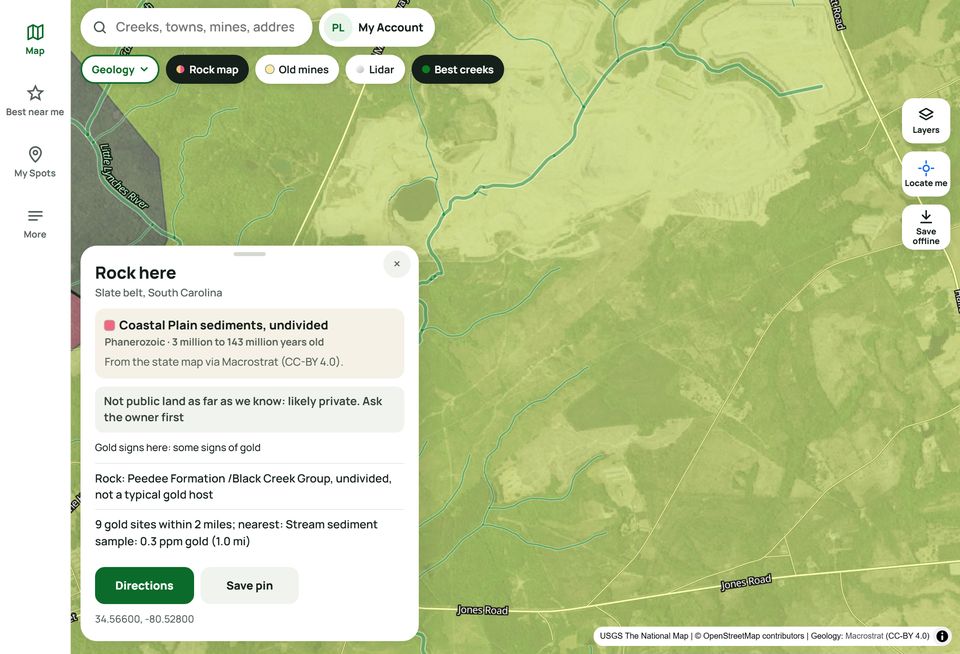
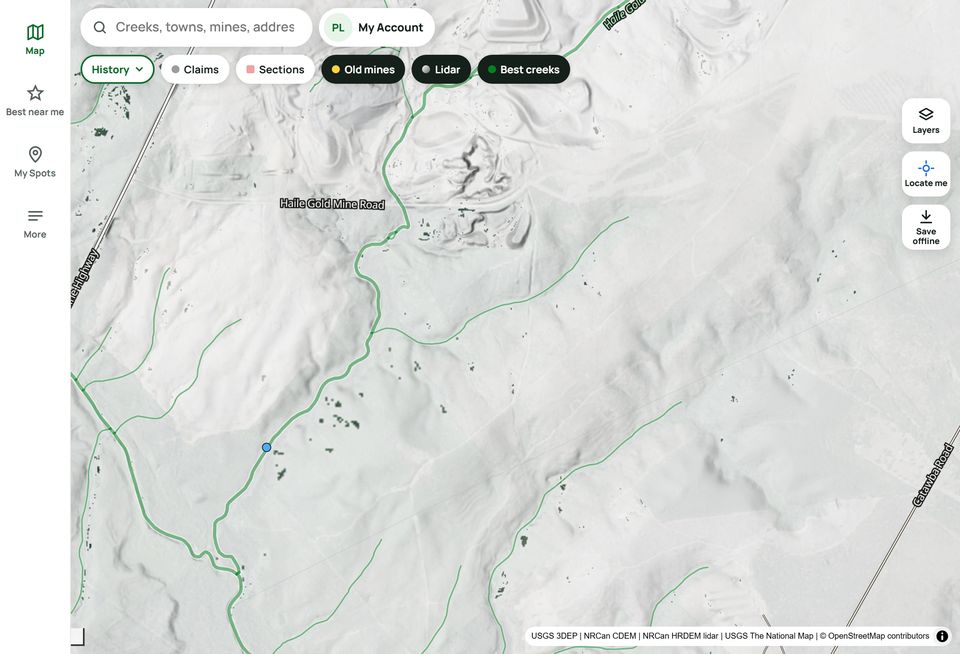
PlacerPro at the Haile gold belt, South Carolina.
Gold areas in South Carolina
PlacerPro covers South Carolina's known gold country:
- Slate belt (Haile, Brewer, Ridgeway, Barite Hill, Dorn)
- Upstate (York, Cherokee, Union, Spartanburg, Greenville, Pickens, Oconee)
Try the South Carolina map free for 7 days
Where to dig once you're on the creek
Even on a good creek, most of the gravel holds little. Gold settles where the water slows: the inside of bends, just below where creeks join, behind boulders, and down in bedrock cracks. Read the beginner's guide to where gold settles.
Gold panning rules in South Carolina
- Almost all of this land is private. Get the owner's written permission before you pan, dig or detect, and use legal access to reach the water. Old mines are private property and can be dangerous: stay out of shafts.
- Sumter National Forest: the forests' own FAQ says recreational panning needs a letter of authorization from the ranger district before you start, naming what you'll do and where. Prospecting that digs the ground needs more permits and review. Call first: Long Cane district (803) 624-9471, Enoree district (803) 276-4810.
- State parks: state law bans taking any rock or mineral without a park permit. Heritage preserves: gathering rocks or minerals is not allowed, and metal detecting is banned on all SCDNR land.
- Congaree National Park and Ninety Six (National Park Service): collecting minerals and using metal detectors are banned. Fort Jackson is an Army base: stay out.
- Suction dredges, pumps and highbankers: on rivers the state counts as navigable, any dredging below the normal high-water mark needs a Construction in Navigable Waters permit from the SC Department of Environmental Services. We found no state rule written for hobby gear on smaller creeks: ask DES and the SC Department of Natural Resources before running one.
- Sumter National Forest: the forests' own FAQ says recreational panning needs a letter of authorization from the ranger district before you start, naming what you'll do and where. Prospecting that digs the ground needs more permits and review. Call first: Enoree district (803) 276-4810, Andrew Pickens district in Oconee County (864) 638-9568.
- Kings Mountain National Military Park and Cowpens National Battlefield (National Park Service): collecting minerals and using metal detectors are banned.
Common questions
Where can I pan for gold in South Carolina for free?
We haven't found an officially designated public panning area in South Carolina yet. Panning is usually allowed on open public land (national forest and BLM) that isn't covered by a mining claim, and on private land with the owner's permission.
Do I need a permit to pan for gold in South Carolina?
Hand panning usually needs no permit on open public land, but the rules depend on who manages the land and what tools you use. Sluices, highbankers and dredges often need permits. The rules for South Carolina are below.
How do I find gold-bearing creeks in South Carolina?
Gold washes downstream from where it eroded out of the rock, so the best creeks drain old mining districts and gold-bearing rock. PlacerPro rates every creek in South Carolina's gold country from old mine records, USGS lab samples and geologic maps, and shows public land and active claims.
Other places
- Gold panning in Alabama
- Gold panning in Alaska
- Gold panning in Arizona
- Gold panning in British Columbia
- Gold panning in California
- Gold panning in Colorado
- Gold panning in Georgia
- Gold panning in Idaho
- Gold panning in Maine
- Gold panning in Montana
- Gold panning in Nevada
- Gold panning in New Hampshire
- Gold panning in New Mexico
- Gold panning in North Carolina
- Gold panning in Oregon
- Gold panning in South Dakota
- Gold panning in Tennessee
- Gold panning in Utah
- Gold panning in Vermont
- Gold panning in Virginia
- Gold panning in Washington
- Gold panning in Wyoming
- Gold panning in Yukon
PlacerPro rates every creek in the gold country of 22 US states, British Columbia and Yukon from old mine records, lab samples and geologic maps. Public panning areas are from official agency sources; check the linked source before you go. Nothing here is legal advice.